
 Search
Font size: A A A
SearchThe spotted lanternfly (SLF) is an invasive insect that has made its way into Kentucky. Originally from Asia, this pest was first confirmed in Kentucky in 2023 and has since been found in additional counties, particularly in Northern Kentucky. University of Kentucky officials are continuing to monitor its spread across the Commonwealth.
Adult spotted lanternflies are about one inch long. Their wings are grayish with black spots when closed, while their hind wings have a distinctive bright red, black and white pattern when opened. Younger lanternflies, or nymphs, are black with white spots and later develop red markings.
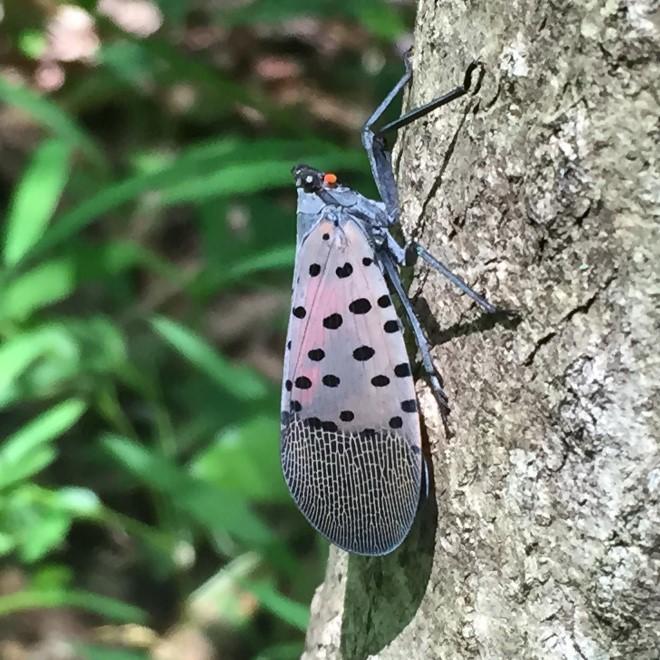
The insects feed on plant sap and are particularly associated with tree-of-heaven, although they can feed on more than 70 species of plants, including grapes, apples and maple trees. Their feeding can produce a sticky substance called honeydew, which can lead to the growth of black sooty mold on plants and surrounding surfaces.
Spotted lanternflies can spread easily because their egg masses can be laid on many hard surfaces, including vehicles, outdoor furniture, firewood, landscaping materials and other objects. People can unknowingly transport them to new locations.
If you think you have spotted a spotted lanternfly or its egg mass:
1. Take a clear photo of the insect or egg mass.
2. If possible, safely collect the insect for identification. UK recommends placing a collected insect in a container and putting it in your freezer.
3. Note where you found it, including the address or location and county.
4. Email your photo or information to ReportAPest@uky.edu.
University of Kentucky asks residents to provide photographic or physical evidence along with geographic information so entomologists can verify sightings and track the pest’s spread.
Don’t assume it’s a spotted lanternfly—report it and let the experts identify it. Early detection helps Kentucky officials better understand where the pest is occurring and determine appropriate management efforts.
For additional information and identification resources, visit the University of Kentucky Office of the State Entomologist and its spotted lanternfly resources.